Friday, August 14, 2020

St. Maximilian Mary Kolbe

 (1894-1941)


“I don’t know what’s going to become of you!” How many parents have said that? Maximilian Mary Kolbe’s reaction was, “I prayed very hard to Our Lady to tell me what would happen to me. She appeared, holding in her hands two crowns, one white, one red. She asked if I would like to have them—one was for purity, the other for martyrdom. I said, ‘I choose both.’ She smiled and disappeared.” After that he was not the same.
He entered the minor seminary of the Conventual Franciscans in Lvív (then Poland, now Ukraine), near his birthplace, and at 16 became a novice. Though he later achieved doctorates in philosophy and theology, he was deeply interested in science, even drawing plans for rocket ships.
Ordained at 24, he saw religious indifference as the deadliest poison of the day. His mission was to combat it. He had already founded the Militia of the Immaculata, whose aim was to fight evil with the witness of the good life, prayer, work and suffering. He dreamed of and then founded Knight of the Immaculata, a religious magazine under Mary’s protection to preach the Good News to all nations. For the work of publication he established a “City of the Immaculata”—Niepokalanow—which housed 700 of his Franciscan brothers. He later founded one in Nagasaki, Japan. Both the Militia and the magazine ultimately reached the one-million mark in members and subscribers. His love of God was daily filtered through devotion to Mary.
In 1939 the Nazi panzers overran Poland with deadly speed. Niepokalanow was severely bombed. Kolbe and his friars were arrested, then released in less than three months, on the feast of the Immaculate Conception.
In 1941 he was arrested again. The Nazis’ purpose was to liquidate the select ones, the leaders. The end came quickly, in Auschwitz three months later, after terrible beatings and humiliations.
A prisoner had escaped. The commandant announced that 10 men would die. He relished walking along the ranks. “This one. That one.” As they were being marched away to the starvation bunkers, Number 16670 dared to step from the line. “I would like to take that man’s place. He has a wife and children.” “Who are you?” “A priest.” No name, no mention of fame. Silence. The commandant, dumbfounded, perhaps with a fleeting thought of history, kicked Sergeant Francis Gajowniczek out of line and ordered Father Kolbe to go with the nine. In the “block of death” they were ordered to strip naked, and their slow starvation began in darkness. But there was no screaming—the prisoners sang. By the eve of the Assumption four were left alive. The jailer came to finish Kolbe off as he sat in a corner praying. He lifted his fleshless arm to receive the bite of the hypodermic needle. It was filled with carbolic acid. They burned his body with all the others. He was beatified in 1971 and canonized in 1982.

“Courage, my sons. Don’t you see that we are leaving on a mission? They pay our fare in the bargain. What a piece of good luck! The thing to do now is to pray well in order to win as many souls as possible. Let us, then, tell the Blessed Virgin that we are content, and that she can do with us anything she wishes” (Maximilian Mary Kolbe, when first arrested).

Father Kolbe’s death was not a sudden, last-minute act of heroism. His whole life had been a preparation. His holiness was a limitless, passionate desire to convert the whole world to God. And his beloved Immaculata was his inspiration.

St. Maximilian Kolbe Aug. 14

 Love Alone Creates

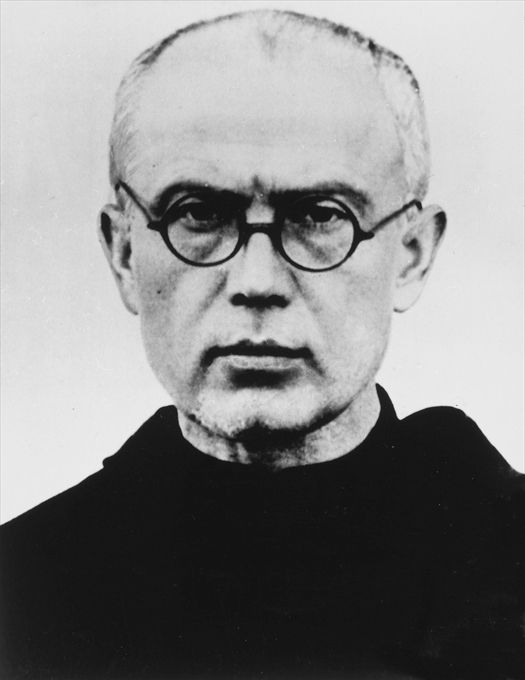
Fr.Maximilian Kolbe 1939.jpg

We live in an age of protests and revolutions.
People want change.
But what this change often brings about
Is burned out cities and business,
And division.

St. Maximilian Kolbe reminds us that
“Love Alone Creates.”

He died in Auschwitz in the starvation bunker.
But his message of Love
Continues to transform hearts and create a a better world,
While that of the Nazis fade away into the dustbin of history.


God Bless

Thursday, August 13, 2020

Thursday 19th Week of Ordinary Time


The Freedom of Forgiveness

Gesù confido in te: ROSARIO A DIO PADRE

When we forgive a person who has hurt us,
We set ourselves free from the pain,
That person caused us.

As Jesus was dying on the cross,
His last words were,
“Father Forgive them for they know not what they do.”

And then He gave up His Spirit.
He was free from all the pain and hurt that had been inflicted upon Him.
And could die in Peace.

We live and die in Peace only when we forgive others not just 7 times,
But 77 times Mt. 18:21-19:1


God Bless

Wednesday, August 12, 2020

St. Clare (1194-1253)


One of the more sugary movies made about Francis of Assisi pictures Clare as a golden-haired beauty floating through sun-drenched fields, a sort of one-woman counterpart to the new Franciscan Order.
The beginning of her religious life was indeed movie material. Having refused to marry at 15, she was moved by the dynamic preaching of Francis. He became her lifelong friend and spiritual guide.
At 18, she escaped one night from her father’s home, was met on the road by friars carrying torches, and in the poor little chapel called the Portiuncula received a rough woolen habit, exchanged her jeweled belt for a common rope with knots in it, and sacrificed the long tresses to Francis’ scissors. He placed her in a Benedictine convent which her father and uncles immediately stormed in rage. She clung to the altar of the church, threw aside her veil to show her cropped hair and remained adamant.
End of movie material. Sixteen days later her sister Agnes joined her. Others came. They lived a simple life of great poverty, austerity and complete seclusion from the world, according to a Rule which Francis gave them as a Second Order (Poor Clares). Francis obliged her under obedience at age 21 to accept the office of abbess, one she exercised until her death.
The nuns went barefoot, slept on the ground, ate no meat and observed almost complete silence. (Later Clare, like Francis, persuaded her sisters to moderate this rigor: “Our bodies are not made of brass.”) The greatest emphasis, of course, was on gospel poverty. They possessed no property, even in common, subsisting on daily contributions. When even the pope tried to persuade her to mitigate this practice, she showed her characteristic firmness: “I need to be absolved from my sins, but I do not wish to be absolved from the obligation of following Jesus Christ.”
Contemporary accounts glow with admiration of her life in the convent of San Damiano in Assisi. She served the sick, waited on table, washed the feet of the begging nuns. She came from prayer, it was said, with her face so shining it dazzled those about her. She suffered serious illness for the last 27 years of her life. Her influence was such that popes, cardinals and bishops often came to consult her—she never left the walls of San Damiano.
Francis always remained her great friend and inspiration. She was always obedient to his will and to the great ideal of gospel life which he was making real.
A well-known story concerns her prayer and trust. She had the Blessed Sacrament placed on the walls of the convent when it faced attack by invading Saracens. “Does it please you, O God, to deliver into the hands of these beasts the defenseless children I have nourished with your love? I beseech you, dear Lord, protect these whom I am now unable to protect.” To her sisters she said, “Don’t be afraid. Trust in Jesus.” The Saracens fled.

The 41 years of Clare’s religious life are poor movie material, but they are a scenario of sanctity: an indomitable resolve to lead the simple, literal gospel life as Francis taught her; courageous resistance to the ever-present pressure to dilute the ideal; a passion for poverty and humility; an ardent life of prayer; and a generous concern for her sisters.


God Bless

Wednesday 19th Week of Ordinary Time

Wiith Love and Compassion Mt. 18:15-25

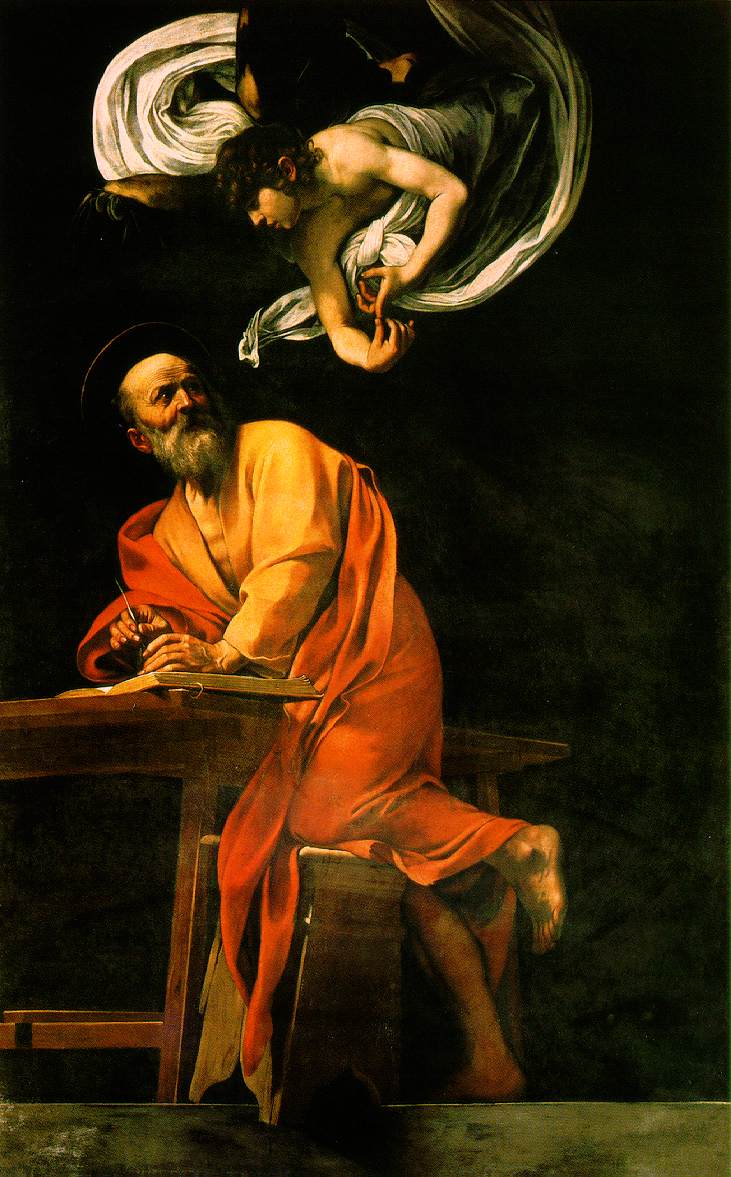
The Inspiration of Saint Matthew by Caravaggio.jpg

Jesus told His disciples that when someone sins against you
You should first talk to him;
Then bring the problem to the community if that person does not listen,
And if that fails,
Treat that person as a Gentile or a tax collector.

And How did Jesus treat Gentiles and tax collectors??
With love and compassion!
Everyone therefore,
Even those with whom we disagree,
Must be treated with love and compassion.


God Bless

Tuesday, August 11, 2020

Feast of St. Clare Aug 11


Simone Martini 047.jpg


“We become what we love and who we love shapes what we become. If we love things, we become a thing. If we love nothing, we become nothing. Imitation is not a literal mimicking of Christ, rather it means becoming the image of the beloved, an image disclosed through transformation. This means we are to become vessels of God's compassionate love for others.”
 St. Clare of Assisi

What do we love?
Where and how we spend most of our time,
Is what we love the most and what we will become.


God Bless

Monday, August 10, 2020

19th Sunday of Ordinary Time

 Hearing God’s Voice


Elijah was the greatest Prophet of the Old Testament.
Of all the prophets of Israel he was the only one
who did not go over to worship false gods.

And now God was going to speak to him.
So he stood on the mountain waiting for God to speak.

And a strong wind came by,
But God was not in the wind.

Then there was an earthquake
But God was not in the earthquake

Then there was a fire,
But God was not in the fire.

And after the fire,
There was a tiny whispering sound,
And when Elijah heard this,
He hid his face in his cloak,
For he knew God was near.

We all have images of what we think God is like in our head.
Powerful and Eternal;
Holy and Unapproachable;
A King, a Judge,
Or someone waiting to catch you when you mess up.

The story of Elijah the greatest prophet of all,
Is a reminder that God is not always what we think He is.

Elijah expected God to reveal Himself,
In Power and Majesty,
Like an earthquake or a consuming Fire.

And instead God revealed Himself in the tiny whisper of a wind.

We often can miss God revealing Himself to us,
Because we have these images and notions of God
That prevent us from noticing God,
When He comes to us in way different than we expect.

God can come to us however and whenever He wants.
Sometimes God speaks to us in the beauty of Creation.
Other times God speaks to us in the depths of our suffering.
God can speak to us in our family members and friends;
In the stranger on the street.
In the Poor and the Homeless.

God actually speaks to us everyday and in various ways.
If we do not hear Him,
It is not because He is not speaking;
But because we expected something different,
And we let our opportunity to hear His voice pass us by.


God Bless